
PFAS essentially exist forever. Nature cannot break down PFAS. …
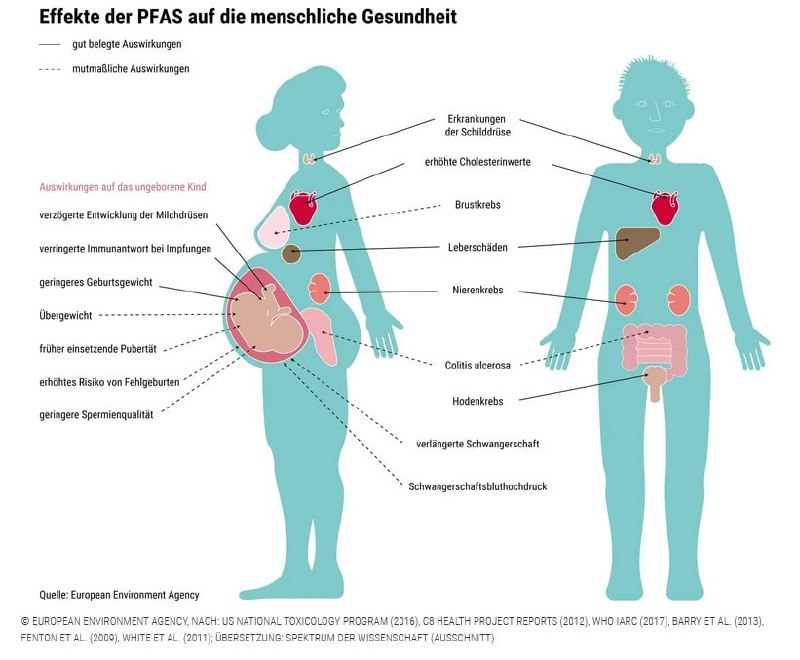
PFAS essentially exist forever. Nature cannot break down PFAS. Humans and animals absorb these substances from the gastrointestinal tract into the blood, where they distribute preferentially in internal organs such as the liver, kidneys, and lungs. They cross the placental barrier and have also been detected in breast milk. Some experts suspect an increased risk from PFAS for asthma, thyroid diseases, chronic inflammatory bowel diseases, as well as testicular and kidney cancer. Population surveys also show a delayed onset of puberty as well as changes in the reproductive organs.
High PFAS concentration in the blood is also associated with elevated cholesterol, negative effects on the thyroid and hormonal balance, as well as reduced birth weight in babies. In particular, the substances PFOA and PFOS, which belong to the PFAS group, are dangerous: they can reduce the effectiveness of vaccinations and are considered carcinogenic according to a report by the science magazine Spektrum.